Yo heredé una casa en Bayamón y decidí alquilarla. Eso no quiere decir que a ti te convenga. Las cinco cosas que deciden.
Esta pregunta me la hacen en casi todas las consultas: "Lumi, ¿la vendo o la alquilo?" Y para Thanksgiving, con la familia sentada en la misma mesa, va a salir otra vez.
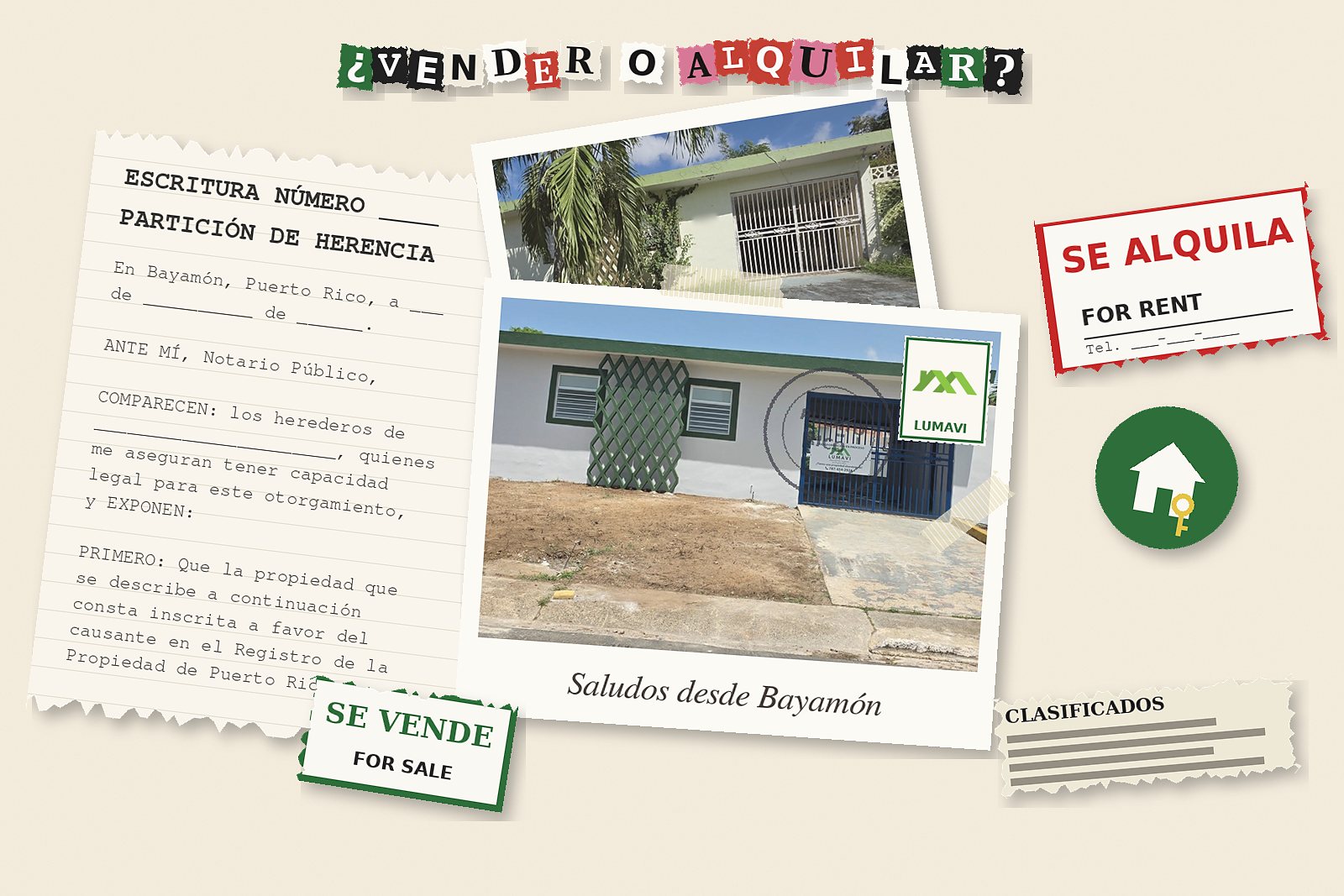
Te digo algo: yo tuve que contestármela a mí misma. Heredé una casa en Bayamón que llevaba más de 30 años cerrada. Decidí arreglarla y alquilarla. Pero eso no quiere decir que tú tengas que hacer lo mismo.
Vender o alquilar la casa heredada en Puerto Rico depende de cinco cosas: los papeles, cómo está la casa, cuánto te queda en la mano, cuánto te entra cada mes después de gastos, y si de verdad puedes manejar una casa desde lejos.
¿Puedo alquilarla si los papeles no están listos?
Primero los papeles, siempre. Hasta que la casa esté inscrita a nombre de ustedes en el Registro de la Propiedad, sigue a nombre de quien murió. Eso es la declaratoria de herederos si no hubo testamento, el relevo de Hacienda, la deuda del CRIM y la firma de todos. Antes de meter un inquilino, pregúntale a tu abogado si ustedes tienen la autoridad pa' alquilarla. Aquí te expliqué el orden.
¿Cuánto me queda si la vendo?
La cuenta es esta: el precio de venta, menos la comisión (del 4% al 6% si vas con realtor), los gastos de cierre, lo que haya que arreglar pa' venderla y la deuda del CRIM. Y los impuestos: antes de firmar, un CPA de Puerto Rico te dice cuánto te toca. Con eso no se adivina.
Y te repito lo que veo todos los días: aquí hay muchísima gente buscando casa. Una casa buena, con buen precio, puede tener oferta en días.
¿Y si la alquilo, de verdad me deja dinero?
Alquilar es tener un negocio, con todo lo que eso trae. A la renta réstale el CRIM, el seguro, el mantenimiento, los meses que se quede vacía y quien la administre si tú no estás aquí. La cuenta tiene que dar después de los gastos, no antes.
Y casi ninguna casa heredada está lista pa' alquilar. La de Bayamón no lo estaba. Treinta años cerrada son treinta años de comején, filtraciones y yerba. Arreglarla no salió barato, y eso va en la cuenta antes del primer inquilino.
¿Puedo manejar un alquiler desde Estados Unidos?
Se puede, pero no sin alguien aquí. Alguien tiene que ir a la casa, coger fotos, coordinar contratistas, pagar el CRIM y contestarle al inquilino. Y si un día hay que sacar a un inquilino, eso va por el tribunal; aquí no se cambian cerraduras ni se corta la luz pa' sacar a nadie.
Una cuenta pa' decidir
Coge lo que te quedaría limpio si la vendes. Divídelo entre lo que te quedaría limpio en un año alquilándola. Ese número es cuántos años de renta, sin un solo mes vacío, necesitas pa' igualar lo que te llevas hoy vendiendo.
Si el número es bajito y la casa está buena, alquilar tiene sentido. Si es alto, o necesitas el dinero ahora, o tus hermanos necesitan su parte, vender casi siempre gana.
Y si la casa de tu familia está en esta pregunta, esto es lo que te toca antes de escoger: saber cómo están los papeles, cómo está la casa por dentro y cuánto debe. Sin eso, cualquier cuenta es adivinar.
Eso lo coordinamos por ti: miramos la casa, los papeles y la deuda, y si decides alquilar, también te la cuidamos desde aquí. Tú decides.
Aquí abajo te dejo por dónde empezar.
I get this question in almost every consult: "Lumi, do I sell it or rent it?" And at Thanksgiving, with the whole family at one table, it's coming up again.
I'll be honest with you: I had to answer it for myself. I inherited a house in Bayamón that had been shut for more than 30 years. I chose to fix it up and rent it out. That doesn't mean you should do the same.
Whether to sell or rent your inherited house in Puerto Rico comes down to five things: the papers, the shape the house is in, what's left in your hand if you sell, what comes in every month after expenses, and whether you can honestly manage a house from far away.
Can I rent it out before the papers are done?
Papers first, always. Until the house is registered in your names at the Registro de la Propiedad, it's still in the name of the person who died. That means the declaratoria de herederos if there was no will, the relevo from Hacienda, the CRIM debt, and every heir's signature. Before you put a tenant in, ask your attorney whether you have the authority to rent it. I walked through the order here.
What do I actually keep if I sell?
The math goes like this: the sale price, minus the commission (4% to 6% if you use a realtor), the closing costs, whatever has to be fixed to sell it, and the CRIM debt. Then taxes: before you sign, a Puerto Rico CPA tells you what you owe. Don't guess on that one.
And I'll repeat what I see every day: a lot of people here are looking for a house. A good house, priced right, can get an offer in days.
If I rent it, will it really make money?
Renting is running a business, with everything that comes with it. From the rent, take out the CRIM, insurance, maintenance, the months it sits empty, and whoever manages it if you're not here. The numbers have to work after expenses, not before.
And almost no inherited house is ready to rent. The one in Bayamón wasn't. Thirty years shut means thirty years of termites, leaks and overgrown yard. Fixing it wasn't cheap, and that goes into the math before the first tenant.
Can I manage a rental from the States?
You can, but not without somebody here. Somebody has to visit the house, take pictures, coordinate contractors, pay the CRIM and answer the tenant. And if you ever need a tenant out, that goes through the court; here you don't change the locks or cut the power to get anybody out.
One number to help you decide
Take what you'd keep, clean, if you sell. Divide it by what you'd keep, clean, from one year of renting. That number is how many years of rent, without a single empty month, you need to match what you'd walk away with today.
If the number is small and the house is in good shape, renting makes sense. If it's big, or you need the money now, or your siblings need their share, selling almost always wins.
And if your family's house is stuck on this question, here's what it means for you before you pick: you need to know where the papers stand, what shape the house is in inside, and how much it owes. Without that, every calculation is a guess.
We coordinate that for you: we look at the house, the papers and the debt, and if you decide to rent, we take care of it from here too. You decide.
Right below I left you where to start.